



Why Industries Are Choosing Servo Motors for Better Factory Automation

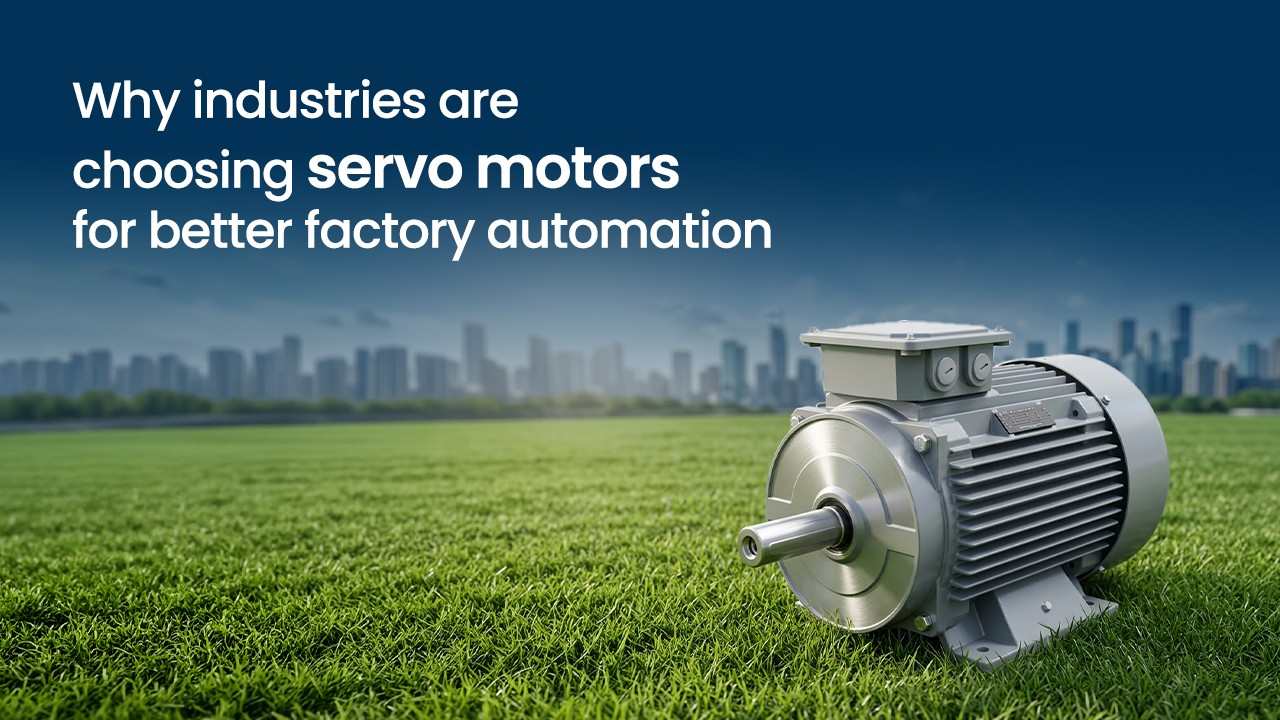
Factory automation is changing the way industries handle production. Machines are now expected to perform tasks with greater speed, accuracy and consistency. Whether it is packaging, assembly, material handling or automated manufacturing, the movement of a machine often needs to be controlled very precisely.
This is where servo motors come in. Unlike motors used simply to keep a machine running, a servo motor is often chosen when the machine needs controlled movement, accurate positioning or changes in speed. This makes servo motors an important part of many automated industrial systems.
What makes servo motors useful for factory automation?
In an automated setup, machines need to perform the same movement repeatedly and accurately. A packaging machine may need to stop at the exact point before sealing. A robotic arm may need to move to a specific position every time.
Servo motors are designed for applications where this level of control is required.
They can help control:
- Position
- Speed
- Torque
- Movement
This allows the machine to respond according to the requirements of the application instead of simply running at a fixed speed.
How does a servo drive system work?
A servo motor usually works as part of a larger control setup. The servo drive system receives instructions and controls the motor accordingly.
In simple terms, the system tells the motor what it needs to do, such as move to a particular position or operate at a certain speed. The motor then responds based on those instructions.
Feedback is also an important part of the system. It helps the controller track the movement of the motor and make adjustments when needed.
This level of control is one reason servo motors are widely used in automated machinery.
Where are servo motors used in industries?
Servo motors are usually used where a machine needs to control its movement rather than simply keep running. You will find them in:
- CNC machines, where precise cutting and positioning are important
- Robotic arms that need to repeat the same movement accurately
- Packaging machines that need to fill, seal or label products at the right time
- Printing machines where speed and positioning need to stay in sync
- Assembly lines, where the same movements have to be repeated again and again
- Material handling equipment used to move, lift or position materials
- Inspection systems that need to place products correctly before checking them
- Textile machines, where different parts often need to move at the same time and in the right sequence
Different machines require different levels of speed, torque and positioning accuracy. This is why industrial servo motors are selected according to the requirements of the equipment.
Why is precision important in automated manufacturing?
In many production processes, even a small positioning error can affect the final result.
For example, if a cutting machine does not stop at the right point, material may be wasted. If a packaging machine moves too early or too late, it can affect the quality of the finished product.
A precision servo motor can help control these movements more accurately.
This can be useful in applications where the same task needs to be repeated many times. The goal is not just to make the machine move, but to make sure it moves in the right way at the right time.
What are the benefits of using servo motors?
Servo motor benefits depend on the application, but one of the main reasons industries use them is the level of control they offer.
Some of the advantages include:
- More control when the machine needs to speed up, slow down or change direction
- Helps the machine stop or move to the required position
- Can respond quickly when the system gives a new command
- Useful when the same movement has to be repeated with consistency
- Makes it easier to adjust how a machine moves for different production requirements
The actual results will depend on how the servo motor is selected, programmed and integrated into the machine.
What is the role of an AC servo motor?
An AC servo motor is commonly used in industrial automation systems where controlled movement and performance are important.
It works with a servo drive system to control speed, position and torque based on the requirements of the application.
AC servo motors can be used in machinery that needs frequent changes in movement or precise control. However, the motor and drive need to be selected according to the specific requirements of the equipment.
Factors such as load, speed and the level of positioning accuracy required can influence the final selection.
When do industries need high-performance servo motors?
Not every machine requires the same level of performance. Some applications involve basic automated movement, while others need faster response and more precise control.
High-performance servo motors may be considered for applications where:
- Movement needs to be highly accurate
- The machine operates at high speeds
- Speed or direction changes frequently
- The system needs to respond quickly to commands
- Repeated movements need to remain consistent
The best choice depends on what the machine needs to do. Selecting a higher-performance motor without understanding the application may not always provide additional benefits.
How can servo motors improve production efficiency?
Automation is often introduced to make production faster and more consistent. Servo motors can support this by giving machines better control over movement.
When a motor responds accurately to the instructions from the control system, the machine can perform repeated tasks with greater consistency.
This can be useful for reducing variation in processes that depend heavily on positioning and timing.
Servo motors can also make it easier to adjust machine movements when production requirements change. Instead of relying only on fixed mechanical settings, the system can be programmed according to the task.
This flexibility is useful in modern manufacturing, where production requirements may change based on the product or process.
How do you choose the right servo motor?
The right servo motor depends on the machine and the work it needs to perform. Before selecting one, it is important to understand the application’s requirements.
Look at:
- The load the motor needs to move
- The required speed
- The torque needed during operation
- The level of positioning accuracy required
- How quickly the motor needs to respond
- The type of servo drive system being used
Once these details are clear, it becomes easier to choose between different industrial servo motors and configurations.
Key Takeaway
Servo motors are widely used in factory automation because they give machines greater control over movement. They can help manage speed, position and torque in applications where accuracy and consistency matter.
From a simple automated machine to a more complex production system, the right servo motor depends on what the equipment needs to do.
Quick Summary
Servo motors are used in automated equipment where controlled and accurate movement is important. They work with a servo drive system and can be used in applications such as robotics, CNC machines, packaging equipment and assembly systems.
A precision servo motor can be useful when the application requires accurate positioning, while high performance servo motors may be suitable for machinery that needs faster response and frequent changes in movement.
Frequently Asked Questions
Servo motors are used in automated machinery that requires controlled movement, speed, torque or positioning.
A servo motor is generally used with a control and feedback system to provide more precise control over movement and positioning.
Industrial servo motors are commonly used in robotics, CNC machines, packaging equipment, printing machines, assembly lines and other automated manufacturing systems.
