



IE2 Motors vs IE3 Motors: Which Energy-Efficient Motor Is Right for You

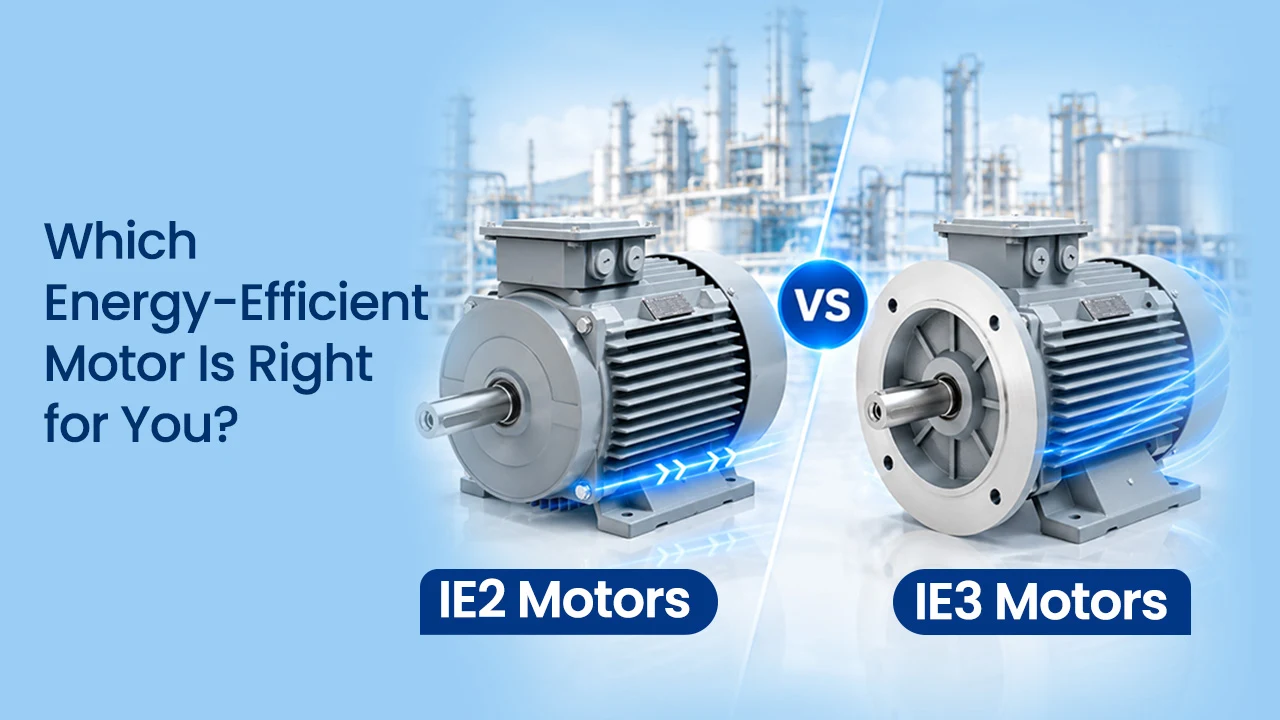
Is an IE3 motor worth the extra cost over an IE2 motor? It depends on how often the motor runs, the load it handles and what you want to achieve in the long run. For some applications, the higher efficiency of an IE3 motor can make sense. For others, an IE2 motor may be a practical choice.
Understanding the difference can help you choose the right motor without paying for efficiency you may not fully use.
What Does IE2 Mean in Motor Efficiency?
IE2 is a rating that tells you how efficiently a motor uses electricity. In simple terms, a higher efficiency rating means the motor loses less energy while running. IE2 is above IE1 and below IE3 and IE4 in the IEC efficiency classification.
An IE2 motor can be a good choice for equipment that runs fewer hours or has a lighter workload. In these cases, the lower upfront cost may make more sense.
The right choice depends on how often the motor runs, the load it handles and the conditions in which it operates.
How Is an IE3 Motor Different From IE2?
An IE3 motor has a higher efficiency class than IE2, which means it has lower energy losses under the applicable test conditions.
This difference can matter when a motor runs for long hours, especially under a steady or high load. Over time, using less energy can help reduce running costs.
Service factor is another consideration when choosing an IE3 motor. LEDL’s IE3 motors are available with a 20% service factor, providing additional operating capacity above the rated load under specified conditions. This can be useful where temporary load variations occur.
However, the actual energy savings will vary. Motor size, load, operating hours, speed and the way the motor is controlled all play a role.
When Does an IE2 Motor Make Sense?
An IE2 motor can be a sensible option when the motor is used for shorter periods or does not regularly operate under high loads.
It may suit applications such as:
- Seasonal agricultural equipment
- Pumps and fans with intermittent use
- Machinery with moderate running hours
- Applications where the initial motor cost is an important consideration
For these situations, paying more for a higher efficiency class may not always provide enough additional savings to justify the investment.
When Should You Choose an IE3 Motor?
An IE3 motor is worth considering when the motor operates for long hours and energy consumption is an important part of the overall running cost.
It can be particularly useful for:
- Motors that operate continuously
- Pumps, fans and compressors with high running hours
- Production equipment used throughout the day
- Industrial applications where reducing energy losses is a priority
The longer and harder a motor works, the more important its efficiency can become.
IE2 vs IE3: Major Differences You Must Know
Factor | IE2 Motor | IE3 Motor |
Efficiency tier | Highly efficient | Higher efficiency |
Upfront cost | Lower | Moderate |
Best suited for | Moderate, intermittent use | Continuous, heavy-load use |
Thermal management | Standard | Improved, lower operating temperature |
VFD compatibility | Limited | Strong |
Regulatory direction | Baseline in several markets | Increasingly mandated for new installations |
Does VFD Compatibility Affect the Choice?
A variable frequency drive, or VFD, controls the speed of a motor by changing the frequency and voltage supplied to it. This can help match motor speed to the needs of the application.
Both IE2 and IE3 motors can be used with VFDs. The important thing is to make sure the motor and VFD are compatible with each other. Check the manufacturer’s specifications before making a choice.
What Should You Consider Before Choosing an IE2 or IE3 Motor?
Before choosing between the two, look at how the motor will actually be used:
- Running hours: How many hours will it operate each day?
- Load: Does it run at full, partial or changing loads?
- Energy costs: How much could efficiency affect your long-term running cost?
- Upfront budget: Is the higher initial cost of IE3 justified for your application?
- Application needs: Check the required speed, torque, power and control method.
- Regulations: Make sure the selected efficiency class meets the requirements applicable to your application and region.
- Service factor: Check the available service factor and whether it provides sufficient capacity for temporary load variations under the specified operating conditions.
This gives you a better basis for choosing an energy-efficient motor than looking at the efficiency rating alone.
Where Do IE2 and IE3 Motors Fit in Industrial Applications?
Both IE2 and IE3 motors have their place in industry. IE2 can work well for equipment that runs for shorter periods, while IE3 is a better option when the motor runs for long hours.
You’ll find them in applications such as pumps, fans, compressors, conveyors, HVAC systems and manufacturing equipment. The best choice depends on how the motor will be used, not just its efficiency rating.
Choosing the Right Motor With LEDL
LEDL manufactures IE2 and IE3 induction motors in a range of power ratings and mountings, along with its IE4 and IE5 motor range. Its three phase motor options cater to different industrial requirements and applications.
If you are unsure whether IE2 or IE3 is right for your equipment, the best place to start is with the motor’s actual operating conditions. Looking at running hours, load, speed and energy use can help you make a more informed decision.
FAQs
IE2 is an international motor efficiency class that offers higher efficiency than IE1.
Yes. IE3 has a higher efficiency class than IE2 and generally has lower energy losses under comparable conditions.
IE2 may make sense for applications with lower running hours or where the lower upfront cost is more important.
IE3 can be a better fit for motors that operate for long hours or under higher loads, where energy savings can add up.
Yes, both can be used with suitable VFD systems, subject to motor and drive compatibility.
