



Common Problems in Induction Motors and How to Troubleshoot Them

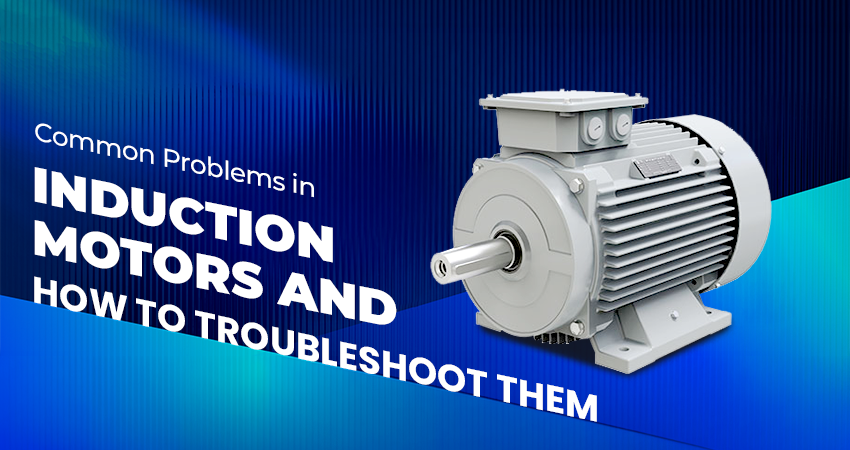
Machine operations in various industrial sectors relies on an Induction Motor. It is used in pumps, compressors, textile machines, and material handling systems. The motor is essential in daily productions. No matter if it’s a 1 HP or 3 HP motor, productivity drops right away if they stop working.
Induction Motors feature a simple construction and a strong design that many recognise. Heat, mechanical stress, weak power supply, and inadequate maintenance can cause issues. Nonetheless, these issues are avoidable if found quickly. Practical troubleshooting is possible with the right processes.
Reasons Behind Overheating Induction Motor
Overheating is the most common trouble a motor experiences. When the temperature goes up, the insulation in the windings starts to break down. Failure to correct in time can result in winding damage which may be irreparable.
Overloading is the primary cause of overheating of the motor. A 3HP motor can overheat if it takes on too much load. It will draw more current than it’s rated for and cause overheating. Other factors increasing chances of overheating include:
- Poor ventilation
- Dust collection
- Voltage variations
Finding a solution for this requires a thorough inspection process which covers:
- Check that the motor is operating at its rated capacity.
- Check that cooling fins are free of debris and air flow is not reduced.
- Measure supply voltage and confirm that all phases have equal voltage.
These motors that are properly sized and installed will run cooler and last longer.
What If the Motor Fails to Start?
Sometimes a motor may not start at all. This situation can cause sudden downtime in industrial operations.
Common reasons are:
- Loose wiring
- Blown fuses
- Tripped overload relays
- Jammed mechanical load
Begin by checking the power supply and terminal connections. If the motor hums but won’t spin, disconnect the equipment. Then, test the motor on its own.
Even an induction motor 1 hp can fail to start if the load connected to it is stuck or overloaded. Basic inspection can solve most starting issues quickly.
Is Excessive Vibration a Serious Warning Sign?
In a nutshell, yes. vibration in a motor is always a warning sign. If left unchecked, it can cause significant damage to bearings and shafts.
Alignment issues between the motor and driven equipment cause vibrations. Mounting bolts that are not tightly fixed and run-down bearings also increase vibrations. A 3HP motor needs proper alignment when running under heavy duty. This helps prevent mechanical stress.
Regular alignment checks, tightening foundation bolts, and monitoring bearing condition help reduce vibration. This leads to a longer motor life.
How Do Bearing Failures Affect Performance?
Bearings allow smooth rotation in a motor. If lubrication is poor or dirt enters the bearing housing, friction increases. This causes the temperature to rise.
If you hear grinding noise or see a motor heating in the Bearing area, there could be a problem. Follow your lubrication schedules, and install the correct type of grease. Even a durable LEDL motor requires timely lubrication to maintain smooth operation.
Preventative maintenance will reduce the chances of breakdowns and provide improved operating efficiency.
Will Electrical Issues Damage a Motor?
Electrical Imbalance or Power Quality can significantly shorten the life of the motor. Voltage spikes, unbalanced phases, and an unstable power supply add stress to the motor.
When voltage is unbalanced, current increases in one winding and causes overheating. This shortens insulation life. Monitoring voltage regularly and ensuring proper grounding helps avoid such problems.
Small motors, like a 1 hp induction motor, need stable power. Larger industrial motors also need this stability.
Why Correct Motor Selection Matters
Many failures occur because the wrong motor size is selected. An undersized motor operates in overload conditions and overheats. An oversized motor wastes energy.
Matching load requirements correctly is essential. For light machinery, an induction motor 1 hp may be sufficient. For greater torque operations, the right selection of 3HP induction motor offers stable output.
Choosing the perfect motor betters energy efficiency and dependability.
LEDL’s Approach to Reliable Motor Performance
At Lakshmi Electrical Drives Limited (LEDL motor solutions), we focus on building motors that provide Strength, Efficiency and Reliable Performance. We have over 40 years’ experience producing electric motors designed for Industrial users.
These motors are built for real-world conditions which include energy-efficient IE2 and IE3 designs. These also offer advanced IE5 synchronous reluctance solutions. Strong build quality and precision engineering help industries lower maintenance risks. These motors also follow global standards to boost uptime. Choosing a high-quality motor backed by engineering expertise drives long-term operational stability.
An Induction type of motor is a vital machine for industrial applications. These Motors require maintenance and care. They often have problems like overheating, wear, and electrical imbalance. Scheduled inspections can help prevent these issues.
Simple maintenance patterns and right selection help extend motor life. Strategic design and manufacturing help companies boost efficiency, reduce downtime, and increase productivity.
FAQ's
Set a regular inspection schedule for these motors based on their operating hours and load.
If the 3HP induction motor is of a proper size, and maintained well, continuous use doesn’t cause overheating
Our motor is built for efficient industrial usage. It saves energy and performs reliably in tough industrial settings.
