




Everything You Need to Know About Choosing the Right Induction Motor for Heavy Machinery

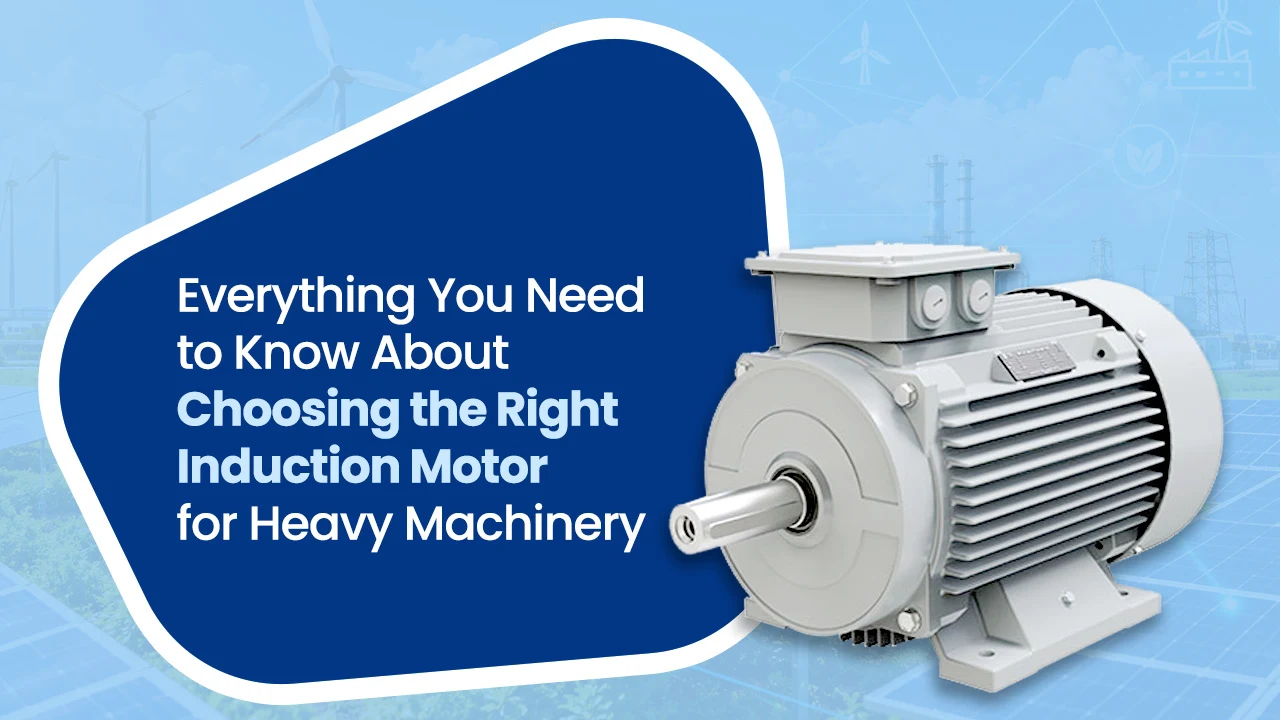
What happens when you use the wrong motor for heavy machinery? Poor performance, higher energy use and frequent breakdowns can follow. Choosing the right induction motor from the start can help avoid these problems. It starts with understanding the machine, its load and how the motor will be used.
How Does an Induction Motor Work?
An induction motor has two main parts: the stator and the rotor. When AC power passes through the stator windings, it creates a rotating magnetic field.
This magnetic field induces current in the rotor, which creates its own magnetic field. The interaction between the two fields makes the rotor turn and produces mechanical energy.
This simple working principle is one reason induction motors are widely used in factories and other industrial applications.
Squirrel Cage or Wound Rotor: Which Is Better for Heavy Machinery?
There are two main types of induction motors: squirrel cage and wound rotor. The right choice depends on the machine’s needs, especially its starting torque requirements.
Squirrel cage motors have a simple and sturdy construction and generally require less maintenance. They are commonly used for pumps, fans and conveyors where the starting load is fairly standard.
Wound rotor motors can provide high starting torque and allow speed control through external rotor resistance. This makes them suitable for heavy machinery that needs more power to get moving, such as cranes, crushers and other heavy-duty equipment.
What Do IE2 and IE3 Motor Ratings Mean?
IE2 and IE3 are efficiency classes that show how efficiently a motor converts electrical energy into mechanical output.
An IE3 motor offers higher efficiency than an IE2 motor under the applicable test conditions, helping reduce energy losses during operation. With increasing emphasis on energy-efficient industrial equipment, businesses are also moving towards higher-efficiency motors such as IE3.
For machinery that runs for long hours, the efficiency difference can become significant over time. However, actual energy savings depend on factors such as load, operating hours, speed and application.
Why Are Three Phase Motors Used for Heavy Machinery?
Three phase motors are widely used for higher-power industrial applications because they provide smooth operation and are well suited to continuous and demanding loads.
They are commonly found in pumps, compressors, conveyors, HVAC systems and production machinery. Single-phase motors are generally used for smaller applications where the power requirements are lower.
What Should You Check Before Choosing an Induction Motor?
Choosing a motor is not simply about picking the highest power or efficiency rating. The motor should be selected based on how the machinery will actually be used and the conditions in which it will operate.
A few things are worth checking:
- Application and usage: Consider the machinery, operating hours, load pattern and working conditions before selecting a motor.
- Starting torque: Check the torque required to start the machine under load.
- Efficiency: Consider higher-efficiency options such as IE3 based on the application and operating requirements.
- Service factor: Check the motor’s service factor and whether it provides sufficient capacity for the expected operating conditions.
- Motor type: Choose between squirrel cage and wound rotor based on the application’s load and starting requirements.
- Power supply: Check that the motor is compatible with the available power supply.
- Speed: Select the motor according to the required operating speed of the equipment.
- Operating environment: Consider conditions such as heat, dust, moisture and ventilation at the installation site.
- Certifications: Check for relevant certifications and approvals, such as UL or CE, where required for the application or market.
- Warranty: Compare the warranty offered by manufacturers, particularly for equipment intended for demanding or continuous operation.
Considering these factors can help you select a motor that is better suited to the machinery and its actual operating requirements.
Where Are Induction Motors Used?
Induction motors are used across a wide range of industries because they can handle different loads and operating conditions. They can be found in both everyday industrial equipment and demanding machinery.
Common applications include:
- Manufacturing and production lines
- Pumps and compressors
- Conveyors and material-handling equipment
- Mining machinery
- HVAC systems
- Textile machinery
- Elevators and lifts
The required motor size, type and efficiency class will depend on the equipment and how it operates.
How Are Industrial Motors Changing?
Industrial motors are becoming easier to monitor as technology develops. Sensors and connected control systems can help track motor performance and identify potential issues before they lead to major problems.
Energy efficiency is also becoming an important part of motor selection. For equipment that runs for long hours, businesses are looking beyond the initial purchase price and considering energy consumption over the motor’s working life.
This makes efficiency, monitoring and proper motor selection important when installing new equipment or replacing older motors.
Why Choose LEDL for Industrial Motors?
LEDL offers electric motors across IE2, IE3, IE4 and IE5 efficiency classes, along with three-phase options for different industrial applications. Its range includes induction motors as well as synchronous reluctance motors, depending on the application and efficiency requirements.
LEDL’s motors are used across sectors such as manufacturing, mining, textiles and HVAC. With different power ratings and configurations available, the company can help industries select an industrial motor based on their machinery, load and operating requirements.
The right motor is not necessarily the most powerful or the most efficient one on paper. It is the one that matches the machine and the way it will actually be used.
FAQs
Service life depends on operating conditions, load, maintenance and how frequently the motor is used.
Yes. Check for relevant certifications and approvals, such as UL or CE, depending on the application and market requirements.
Yes. Compare warranty coverage and duration along with the motor’s specifications, efficiency and suitability for your application.
Consider the load, operating hours, required speed, starting torque and working conditions before selecting a motor.
Overloading, poor ventilation, voltage issues and demanding operating conditions can contribute to overheating.
