


Why Synchronous Reluctance Motors Are the Future of Energy Efficient Industrial Operations

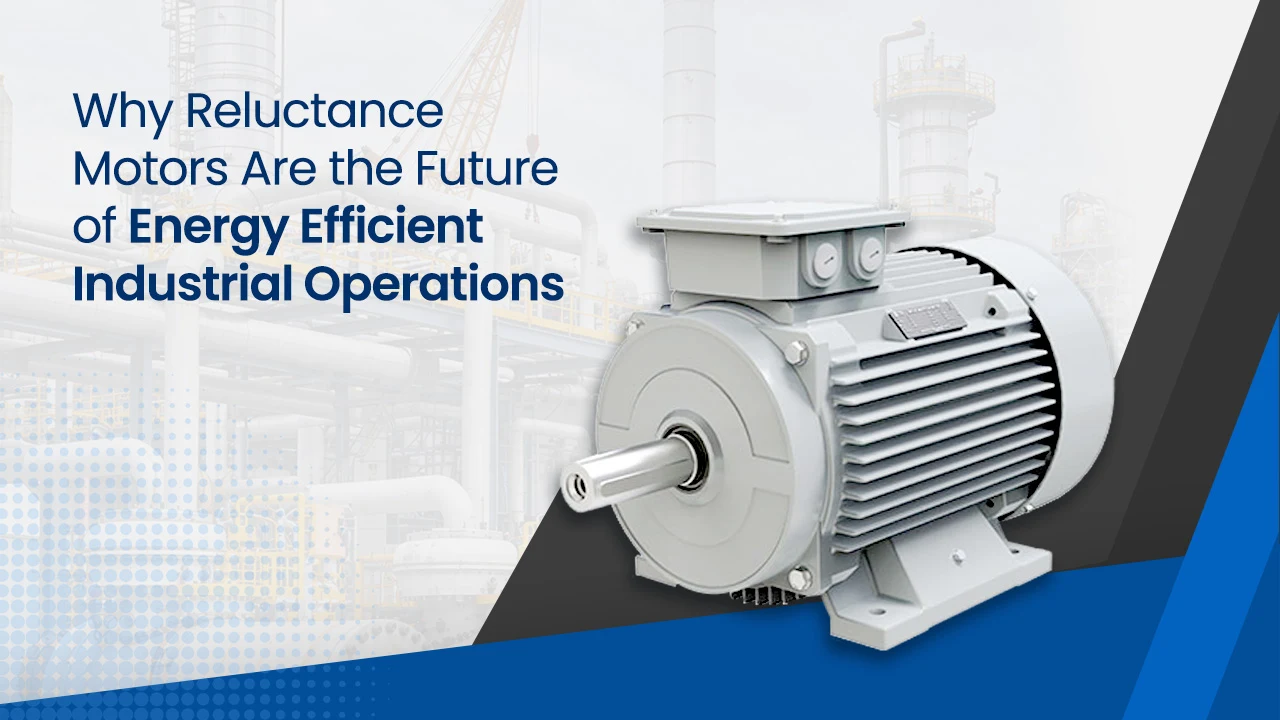
What if a simple change in motor technology could help industries use less energy? For factories and other industrial setups where motors run for hours every day, even small efficiency gains can make a difference over time.
This is why reluctance motors, especially synchronous reluctance motors, are getting more attention. But what exactly makes them different, and where do IE5 motors fit in?
What Is A Reluctance Motor and How Does It Work?
A reluctance motor uses a magnetic field to turn its rotor. The rotor moves towards the magnetic field created by the stator, and this movement produces the torque needed to run the motor.
The rotor has a simple design. In magnet-free motors, there are no permanent magnets or rotor windings. This means the rotor has fewer components, which can also help reduce rotor losses.
There are two main types of reluctance motors: switched reluctance motors and synchronous reluctance motors. They work differently and are used for different applications.
How Does a Synchronous Reluctance Motor Work?
A synchronous reluctance motor, or SynRM, has a rotor that follows the stator’s magnetic field. As the magnetic field rotates, the rotor follows it and keeps running at the same speed.
The rotor does not need permanent magnets or windings. Instead, its design uses the magnetic field to produce torque and keep the motor running.
This simple design makes SynRM motors useful for industrial applications where motors need to run efficiently and reliably for long hours.
Why Does Motor Efficiency Matter in Industry?
Industrial motors often run for long periods, and some may operate almost continuously. Naturally, the amount of electricity they use can add up over time.
A more efficient motor reduces energy loss while converting electrical energy into mechanical output. This is especially useful in applications where motors run for many hours every day.
However, choosing an efficient motor is only part of the equation. Actual energy savings depend on factors such as motor size, load, operating hours, speed, the drive system, and the equipment it powers.
What Makes an IE5 Motor Different?
IE5 is an efficiency rating, not a particular type of motor. Simply put, it tells us how efficiently a motor uses electricity.
The higher the efficiency, the less electrical energy is lost during operation under the specified test conditions.
LEDL’s IE5 range uses synchronous reluctance technology and includes different power ratings for industrial applications. This gives industries options based on the equipment type and performance they need.
How Can an IE5 Electric Motor Help Reduce Energy Losses?
An IE5 electric motor is designed to operate with lower energy losses than motors in lower efficiency classes under comparable conditions.
This can be useful when a motor runs for long hours. Even a small difference in energy consumption can become more noticeable over the motor’s working life.
LEDL’s IE5 range is designed for applications such as pumps, fans, blowers, compressors, HVAC systems and refrigeration. The right choice, however, depends on the specific application and operating conditions.
How Do Reluctance Motors Compare to Induction Motors?
Factor | Reluctance Motor | Induction Motor |
Torque generation | Magnetic alignment | Electromagnetic induction |
Rare earth material need | None | Varies by design |
Maintenance | Generally lower | Standard |
Efficiency at top tier | Higher (IE5 capable) | Typically lower tier |
Cost dependency on materials | Lower | Can be higher |
This comparison isn’t about one motor being universally better. It’s about matching the right technology to the specific application and efficiency requirement.
How Are Reluctance Motors Different From Induction Motors?
Both reluctance and induction motors are widely used in industry, but they work in different ways.
A reluctance motor produces torque through the interaction between the rotor and the magnetic field. An induction motor, on the other hand, uses electromagnetic induction to produce torque.
The rotor construction is also different. Magnet-free synchronous reluctance motors do not need permanent magnets or rotor windings, while induction motors use conductive elements in the rotor.
Neither technology is automatically right for every application. The choice depends on factors such as the required speed, load, drive system, motor rating and operating conditions.
Where Can Reluctance Motors be Used?
Reluctance motors can be used across a range of industrial applications. LEDL’s product and sector information covers areas such as HVAC, pumps, compressors, conveyors, industrial automation, textile machinery, food processing and mining.
They can be considered for equipment such as:
- Pumps that run for long hours
- Fans and blowers
- Industrial compressors
- HVAC systems
- Conveyors and material-handling equipment
- Production and textile machinery
Always select the motor based on the equipment’s actual requirements.
What Should You Check Before Choosing an Ie5 Motor?
An IE5 motor can be a good choice for the right application, but efficiency shouldn’t be the only factor you consider.
Consider these factors before making a decision:
- Operating hours: A motor that runs for long hours may benefit more from improved efficiency.
- Load: Check whether the motor normally runs at full load, partial load or varying loads.
- Speed: Make sure the motor can meet the required speed for the application.
- Drive compatibility: Check that the motor works well with the drive or control system being used.
- Motor rating: Choose the right power and torque for the equipment.
- Overall cost: Consider energy use, maintenance, installation, and the motor’s expected working life.
Considering these factors will help you choose a motor that suits the application.
Why Are Reluctance Motors Gaining Attention?
Energy efficiency has become a key factor in how industries choose equipment. Businesses are no longer looking only at the purchase price. They also want to understand how much energy equipment will use over time.
Synchronous reluctance motors offer a magnet-free rotor design and can be available in high-efficiency classes such as IE5. For the right applications, this makes them worth considering when looking for energy-efficient motor solutions.
Why Choose LEDL For Synchronous Reluctance Motors?
LEDL has been developing synchronous reluctance motor technology since 2016 and offers IE4 and IE5 SynRM options across different power ratings.
Its IE5 range is designed for applications including pumps, fans, blowers, compressors, HVAC and refrigeration. LEDL also publishes performance data for its motors, helping industries evaluate the right option for their requirements.
The key is to start with the application, understand its requirements and then choose the motor that fits.
FAQs
They can offer high efficiency, particularly when designed for high-efficiency applications. Actual performance depends on the motor, load, speed, drive and operating conditions.
IE5 is an efficiency class. It describes how efficiently a motor operates, rather than a specific type of motor.
SynRM motors can be used for applications such as pumps, fans, compressors, HVAC systems, conveyors and other industrial equipment, depending on their specifications.
IE5 refers to the motor’s efficiency class, while synchronous reluctance refers to the motor technology. A synchronous reluctance motor can be designed to meet the IE5 efficiency class.
Disclaimer: Motor performance and energy savings depend on factors such as motor rating, load, operating hours, drive system, installation and application. Refer to the manufacturer’s technical specifications for application-specific performance
Explore Our latest Blogs
Energy Efficiency Is No Longer Optional for Modern Manufacturing Plants
IE3 vs IE5 Motors: The Upgrade Every Growing Factory Should Evaluate
How High Efficiency Industrial Motors Improve Productivity and Reduce Energy Costs
