


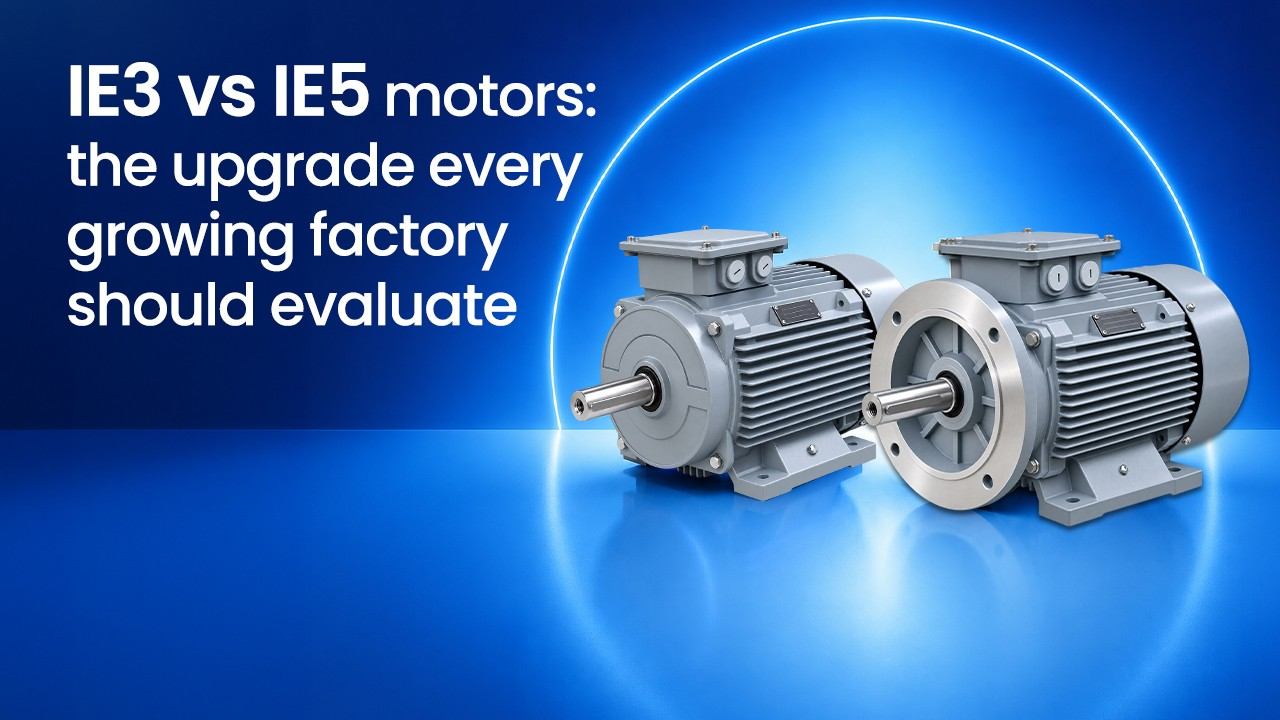
IE3 vs IE5 Motors: The Upgrade Every Growing Factory Should Evaluate

As a factory grows, so does the demand on its equipment. More machines may be added, production hours can increase, and electricity consumption can start taking up a larger share of operating costs. Motors are often part of this picture, especially when they run pumps, fans, compressors, conveyors and other industrial equipment for hours every day.
This is where the IE3 vs IE5 comparison becomes relevant. An IE3 motor and an IE5 motor are both designed with energy efficiency in mind, but they offer different efficiency levels. Whether an upgrade makes sense depends on how the motor is used, how long it runs and whether the expected energy savings justify the investment.
What is an IE3 motor?
An IE3 motor is commonly referred to as a premium efficiency motor. It is designed to reduce energy losses compared to lower efficiency motor classes.
An IE3 electric motor can be used across a range of industrial applications. It is often considered for equipment that runs regularly and where electricity consumption is an important part of the overall operating cost.
Common IE3 motor applications include:
- Pumps used in industrial processes
- Fans and ventilation systems
- Compressors
- Conveyors
- Material handling equipment
- Manufacturing machinery
The actual suitability of an industrial IE3 motor depends on the requirements of the equipment, including load, operating hours and working conditions.
What is the difference between IE3 and IE5 motors?
The main difference in the IE3 vs IE5 comparison is their level of efficiency. An IE5 motor is designed to achieve a higher efficiency level, which means it can have lower energy losses during operation.
But a higher efficiency rating alone should not decide the purchase.
For a machine that runs only for a short time each day, the difference in electricity use may not have a major impact. On the other hand, a motor that operates for most of the day can use a significant amount of electricity over its working life.
That is why the decision usually comes down to how the motor is actually used.
When does upgrading from an IE3 motor to IE5 make sense?
An upgrade is worth evaluating when a factory has motors that run for long hours or operate almost continuously.
For example, if a motor powers an important production process for multiple shifts every day, even a small reduction in energy use can become meaningful over several years.
An IE5 motor may be worth considering when:
- The existing motor operates for long hours
- Electricity consumption is a major operating expense
- The equipment is expected to remain in use for several years
- The application is suitable for the motor technology
- The expected energy savings justify the higher initial investment
This does not mean every IE3 motor needs to be replaced. In some cases, continuing with an existing motor may make more sense until replacement is required.
How do IE3 motor benefits compare with IE5?
One of the main IE3 motor benefits is the balance it can offer between efficiency and cost. For many industrial applications, an IE3 motor may continue to be a practical option.
An IE5 motor takes energy efficiency further, which can be particularly relevant for equipment with high operating hours.
The difference may look small when comparing two motors on paper. However, the picture can change when you consider:
- How many hours the motor runs in a year
- The amount of electricity it consumes
- The cost of electricity
- How long the motor is expected to remain in service
- The difference in purchase and installation costs
Looking at these factors together gives a clearer idea of whether an upgrade makes financial sense.
Which motors should a growing factory evaluate first?
Replacing every motor at once is not always necessary or practical. A better approach can be to look at where most of the electricity is being used.
Start with the motors where an upgrade is likely to make the biggest difference:
- Motors that are running almost throughout the day
- Equipment that operates shift after shift
- Motors linked to machines where a stoppage can affect production
- Older motors that are already nearing the end of their working life
- Areas where electricity consumption is already higher than expected
This can help factories prioritise investments instead of treating every motor upgrade the same way.
Why does the application matter when choosing an energy-efficient motor?
A higher efficiency motor still needs to suit the equipment it will run.
The motor should be selected according to the actual needs of the application. Load, speed, torque and operating conditions all need to be considered before making a decision.
For example, a pump and a conveyor do not put the same demands on a motor. The working environment matters too. A motor installed in a clean indoor space may have very different requirements from one working around heat, dust or other tough conditions.
Before upgrading, it is useful to review:
- The equipment the motor will be running
- How many hours it operates
- The load it handles
- Speed and torque requirements
- Conditions at the installation site
- The expected life of the equipment
An energy-efficient motor works best when it is selected for the right application.
How can IE3 vs IE5 motors affect long-term factory costs?
The purchase price is only one part of what a motor will cost over its lifetime.
A motor that runs every day will continue to consume electricity year after year. This means that energy use can become a higher cost than the motor itself, particularly in facilities with several motor-driven systems.
For a growing factory, reviewing motor efficiency can therefore be part of long-term planning. An IE5 upgrade may not be necessary everywhere, but certain high-use applications may offer a better opportunity for savings.
The key is to look at the numbers for the specific application instead of assuming that the highest efficiency option will always deliver the best return.
Key Takeaway
An IE3 motor can still be a practical choice for many industrial applications. However, factories with motors running for long hours may want to evaluate whether moving to a higher efficiency option could reduce electricity use over time.
The IE3 vs IE5 decision should be based on how the motor is used, the cost of electricity and the expected life of the equipment.
Quick Summary
IE3 motors are premium efficiency motors widely used across industrial equipment. IE5 motors offer a higher level of efficiency and may be worth evaluating for applications with long operating hours.
For a growing factory, the best approach is to identify the motors that use the most energy or run the longest and evaluate whether an upgrade makes practical and financial sense.
Frequently Asked Questions
An IE3 motor is a premium efficiency motor designed to reduce energy losses during operation.
In the IE3 vs IE5 comparison, IE5 represents a higher efficiency level and is designed to have lower energy losses.
Not necessarily. The decision depends on the motor’s operating hours, application, electricity costs and whether the expected savings justify the investment.
