



How High Efficiency Industrial Motors Improve Productivity and Reduce Energy Costs

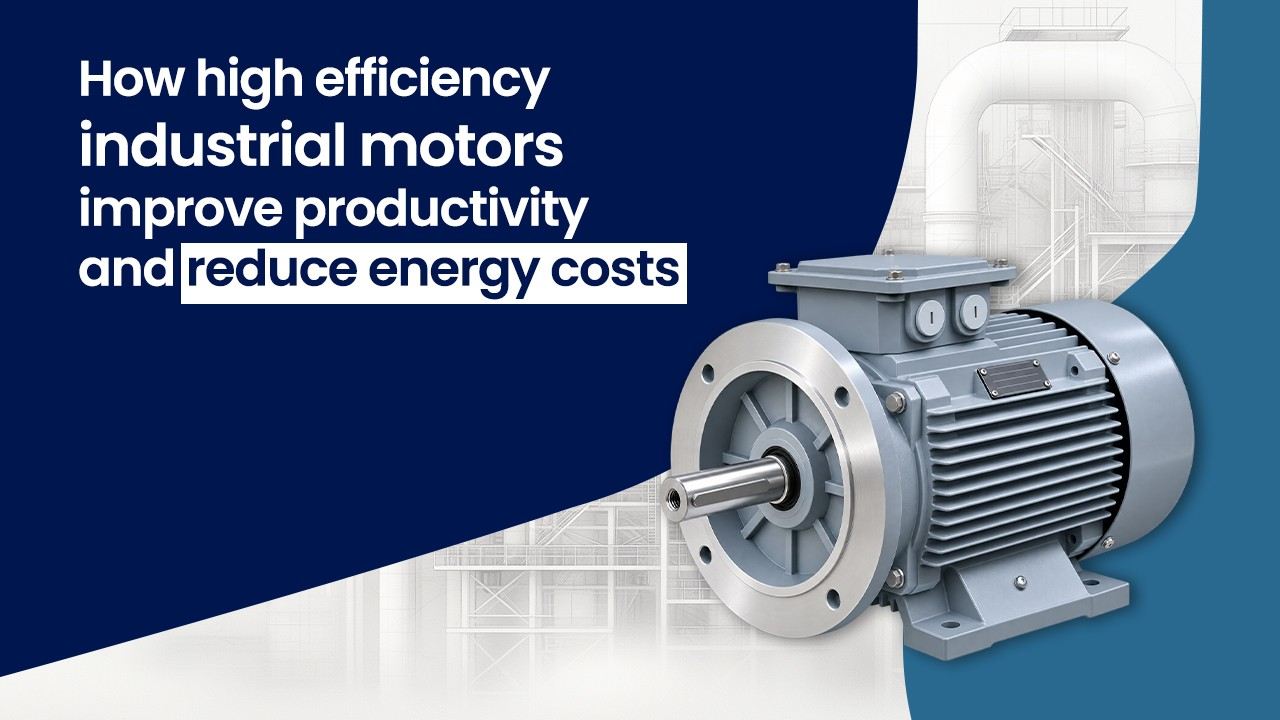
Industrial motors are behind many of the machines used in manufacturing every day. They run pumps, conveyors, compressors, fans and production equipment, often for several hours at a stretch. When a motor is not suited to the job, it can affect the machine connected to it and create interruptions that nobody on the production floor wants to deal with.
This is why choosing the right industrial motors matters. Along with keeping equipment running, motor efficiency can also affect how much electricity a facility uses over time. For industries with several motor-driven machines, this can become an important part of overall operating costs.
Why do industrial motors matter in manufacturing?
In a manufacturing unit, different machines often depend on each other. If a conveyor stops, the next stage of the process may also have to wait. The same can happen when a pump, compressor or another important piece of equipment develops a problem.
A motor that suits the application can help the equipment do its job properly. It should be able to handle the expected load, run for the required hours and work under the conditions present at the site.
This does not mean the motor alone decides how smoothly production will run. Installation, maintenance and the condition of the connected equipment matter too. Still, starting with the right motor can prevent problems that come from incorrect selection.
How does a high efficiency industrial motor reduce energy costs?
Every time electric motors run, they use electricity. Not all of that energy is used to power the equipment. Some of it is lost during operation, mainly as heat.
A high efficiency industrial motor is designed to keep these losses lower. This means more of the electricity supplied to the motor is used for the work it needs to do.
For one machine, the difference in energy use may not seem significant. But think about a manufacturing facility with several motors running throughout the day. The difference can become more noticeable when viewed over months or years.
How much an industry can save will depend on factors such as:
- The number of hours the motor runs each day
- The load it handles during operation
- The electricity cost at the facility
- The efficiency of the existing motor
- The type of equipment being used
This is why motors that run for long hours are often worth reviewing when a business is looking at ways to reduce energy consumption.
Can industrial motors improve productivity?
Productivity is not just about increasing the speed of a production line. Keeping machines running without frequent interruptions matters just as much.
Manufacturing motors need to match the requirements of the equipment they power. A motor that is too small for the job may struggle with the load. At the same time, simply choosing a bigger motor is not always the answer.
The motor needs to suit the equipment, its workload and the way it is used.
For example, a motor running a conveyor may face very different demands from one used in a pumping system. This is where application-based selection becomes important.
Where are industrial motors commonly used?
Industrial motor applications are found across different parts of a manufacturing facility. The type of motor required depends on the machine and the work involved.
Some common applications include:
- Pumps and pumping systems
- Conveyors and material handling equipment
- Fans and blowers
- Compressors
- HVAC systems
- Processing machinery
- Production and assembly equipment
Different industrial motor applications come with different operating requirements. A motor that works well for a fan may not necessarily be the right choice for a conveyor carrying heavy material.
When are heavy duty industrial motors needed?
Some machines work under more demanding conditions than others. They may handle heavier loads, operate for long hours or work in environments where dust, heat or moisture are present.
Heavy duty industrial motors may be considered for such applications, depending on the actual requirements of the equipment.
Before choosing one, look at the following:
- The type of machine being used
- The load involved during regular operation
- How often the equipment will run
- The speed and torque required
- The conditions at the installation site
A heavy-duty motor is not automatically the right choice simply because it has a higher capacity. The motor should match the work it is expected to do.
Why does choosing the right motor make a difference?
Buying industrial motors based only on price or horsepower can create problems later. Two motors with similar power ratings may still be designed for different applications.
The way the equipment is used should guide the choice. Some machines run for hours without stopping, while others are used only when needed. The load can also stay the same or change during operation. Looking at these day-to-day requirements can help you choose a motor that fits the application.
This is where industrial motor solutions should be selected around the application rather than the other way around.
A good starting point is to understand:
- The power required by the equipment
- The type of load involved
- Daily operating hours
- Speed and torque requirements
- The working environment
- Whether energy efficiency is a priority
Once these details are clear, it becomes easier to choose from different electric motors.
How can industries get more from their motors?
Choosing the right motor is only one part of the job. Regular attention can also help keep it running properly.
Keep an eye out for changes such as unusual noise, overheating or a drop in performance. These can indicate that the motor or the connected equipment needs attention.
It can also be useful to review motors that run for the longest hours or consume the most electricity. These may offer the biggest opportunity when looking at energy use and equipment upgrades.
A high efficiency industrial motor can be considered where the application and operating hours justify the investment.
Key Takeaway
Industrial motors are a key part of day-to-day manufacturing. When the motor is right for the job, the equipment can run smoothly without putting extra pressure on the system.For equipment that operates for long hours, a high efficiency industrial motor can also help reduce energy losses and manage electricity costs over time.
Quick Summary
Industrial motors are used in everything from pumps and conveyors to compressors and production machinery. The right motor depends on the equipment, the load it handles, how long it runs and the conditions in which it operates.
High efficiency motors can use less electricity, and choosing the right one for the job can help keep the equipment running without unnecessary interruptions.
Frequently Asked Questions
Industrial motors are used to run equipment such as pumps, fans, compressors, conveyors, HVAC systems and manufacturing machinery.
It is designed to reduce energy losses during operation. For motors that run for long hours, lower energy losses can add up over time.
They can be considered for equipment that handles demanding loads, runs for long periods or operates in challenging industrial conditions.
