




Why High Efficiency Electric Motors Are the Smart Choice for Modern Industries

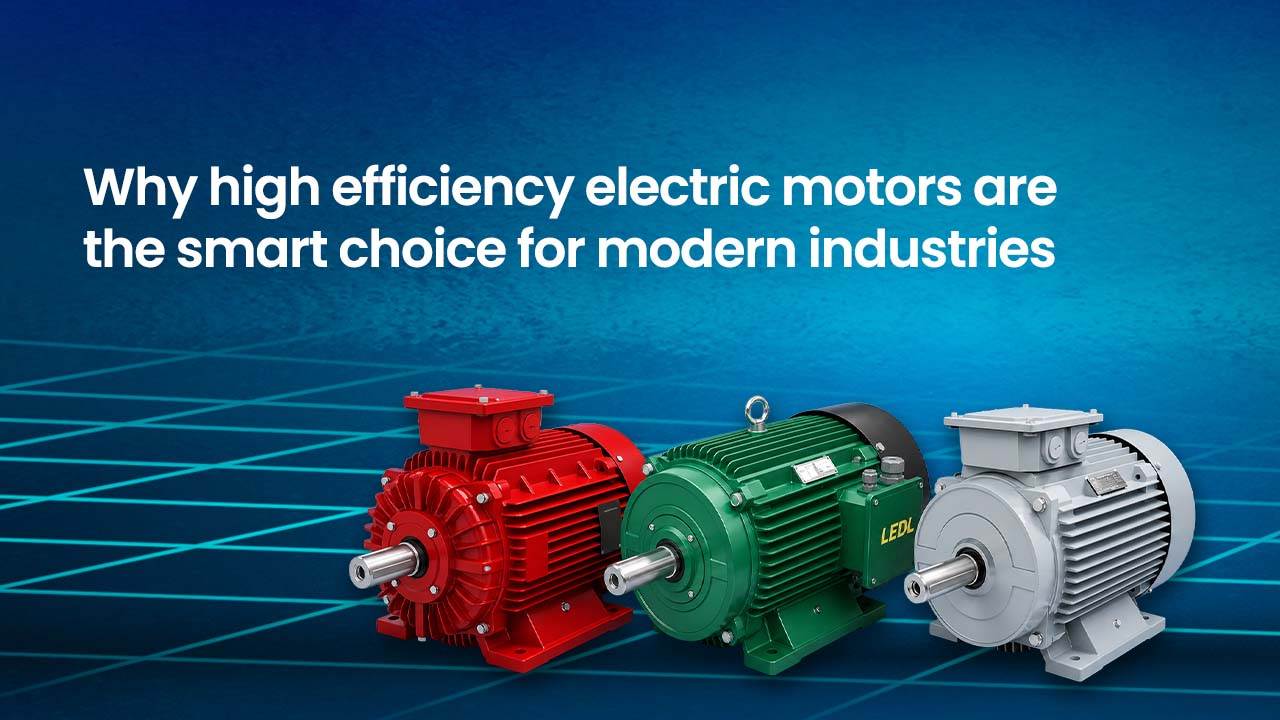
Electric motors are used across industries to run equipment such as pumps, fans, compressors, conveyors and manufacturing machinery. Since many of these machines operate for several hours a day, the electricity they consume can make up a significant part of operating costs. This is one reason high-efficiency electric motors are becoming an important consideration for modern industries.
An efficient motor can reduce energy losses while delivering the required output. Over time, this can help businesses manage electricity consumption and get more from the equipment they already use. But efficiency alone is not enough. The motor also needs to match the application, load and operating conditions.
What makes an electric motor high efficiency?
When an electric motor runs, not all the electrical energy supplied to it is converted into useful mechanical energy. Some of it is lost as heat.
High efficiency electric motors are designed to reduce these losses. Improvements in motor design, materials and internal components can help the motor use electrical energy more effectively.
For one motor, the difference in energy consumption may seem small. However, in a factory where several electric motors run every day, these differences can add up over time.
This is particularly relevant for equipment that operates for long hours or runs continuously.
Why are industries choosing high efficiency electric motors?
For industrial businesses, the cost of running a motor does not end with its purchase. Electricity consumption over the years can be a much larger expense.
High efficiency electric motors can help reduce unnecessary energy use, especially in applications where motors are used regularly.
Some of the reasons industries consider efficient motors include:
- Uses less electricity compared to a standard motor in suitable applications
- Wastes less energy as heat during operation
- Can help bring down electricity costs when motors run for long hours
- Useful for equipment that operates regularly or continuously
- Can be considered as part of a wider effort to improve energy efficiency in a facility
The actual savings will depend on the motor size, load, operating hours and electricity costs. This is why it is important to assess the application before selecting a motor.
Where are high efficiency electric motors used?
Electric motor applications can be found across manufacturing plants, processing facilities and other industrial environments.
Common applications include:
- Pumps and pumping systems
- Fans and blowers
- Compressors
- Conveyors
- Material handling equipment
- HVAC systems
- Manufacturing machinery
- Processing equipment
A motor used in a conveyor, for example, may have very different requirements from one used in a pump or compressor. Power output is only one part of the selection process. Speed, torque, duty cycle and working conditions also matter.
This is where suitable industrial motor solutions become important.
How can efficient motors help control operating costs?
When selecting electric motors, the purchase price often gets the most attention. However, the initial cost is only one part of the bigger picture.
A motor that runs for years will continue to consume electricity throughout its working life. Even a small improvement in efficiency can make a difference when the motor operates for long hours.
Before making a decision, industries should consider:
- How many hours the motor will run
- The load it will handle
- The cost of electricity
- The required efficiency level
- Expected maintenance needs
- Operating conditions
Looking at these factors together can give a clearer idea of the motor’s overall cost of operation.
In some cases, a motor with a higher upfront cost may prove more economical over time because of lower energy consumption.
What is the role of DC electric motors in industry?
DC electric motors are used in applications where speed control and torque are important. Their suitability depends on the requirements of the equipment and the level of control needed.
They may be used in:
- Material handling systems
- Automated machinery
- Machine tools
- Mobility applications
- Specialised industrial equipment
Like other electric motors, DC electric motors need to be selected based on the application rather than simply choosing the highest-rated option.
The required speed, load, torque and operating environment should all be considered.
Why is choosing the right motor important?
A high efficiency motor will not deliver the expected results if it is not suitable for the equipment it is running.
An incorrectly sized motor can affect performance and energy use. Similarly, a motor that works well in one environment may not be suitable for another.
Before finalising the motor, look at what the equipment actually needs:
- How much power does the machine require?
- Does the application need a particular speed or level of torque?
- Will the motor be running continuously or only at certain intervals?
- What kind of load will it be handling?
- Will it operate in a dusty, hot or demanding environment?
- How many hours is it expected to run each day?
These details can make a big difference to motor selection. Electric motor manufacturers in India can then help identify industrial motor solutions that are suited to the actual application.
The aim should not simply be to buy a more efficient motor. It should be to choose a motor that is both efficient and suitable for the job.
How do high efficiency electric motors support modern industries?
Modern industries need to keep production running while also keeping operating costs in check. In facilities where motors power several machines, the electricity used by this equipment can make a noticeable difference to overall costs.
High-efficiency electric motors can help reduce energy losses and support better use of electricity across different applications.
For businesses with multiple motors, reviewing existing equipment can also help identify areas where energy use can be improved. This does not necessarily mean replacing every motor at once. The priority may depend on operating hours, the condition of existing equipment and the requirements of the application.
Choosing efficient electric motors can therefore be part of a larger approach to improving industrial operations.
What should industries consider before choosing an electric motor?
There is no one motor that works for every application. A good selection starts with understanding what the equipment actually needs.
Consider:
- The application and type of equipment
- Power and torque requirements
- Operating speed
- Load conditions
- Working environment
- Number of operating hours
- Energy efficiency requirements
- Maintenance and service needs
Electric motor manufacturers in India can offer different motor types and configurations, but the right choice should always depend on how and where the motor will be used.
Key Takeaway
High efficiency electric motors can help industries reduce energy losses and manage long-term electricity consumption. They are particularly useful in applications where motors run for extended periods.
However, efficiency is only one part of motor selection. The right motor should also meet the speed, load, torque and operating requirements of the application.
Quick Summary
Electric motors are used in a wide range of industrial equipment, from pumps and fans to conveyors and manufacturing machinery. High efficiency electric motors can help reduce energy losses and support lower electricity consumption over time.
The best industrial motor solutions are based on the actual application. Before choosing a motor, industries should consider factors such as load, operating hours, speed, torque and working conditions.
Frequently Asked Questions
They are motors designed to reduce energy losses and use electrical power more efficiently during operation.
They are commonly used in pumps, fans, compressors, conveyors, HVAC systems and manufacturing equipment.
The right manufacturer can help businesses find motors suited to their specific application, operating conditions and performance requirements.
